
Have you ever wondered why your favorite deck of cards starts to look a bit worn out after a few games? Well, you’re not alone! The durability of playing cards has always been a focal point for players and collectors alike. Recently, a conversation between CPPS and a playing card review expert revealed a curious, often overlooked issue: ink bleed (specifically, deep red).
Unlocking The Ink Bleed Mystery
It all began with a simple inquiry from CPPS about a brand of poker: “Does the red ink bleed to the edges of the cards occur after multiple shuffles?” Little did they know, this straightforward question would unlock a treasure trove of playing card wisdom!
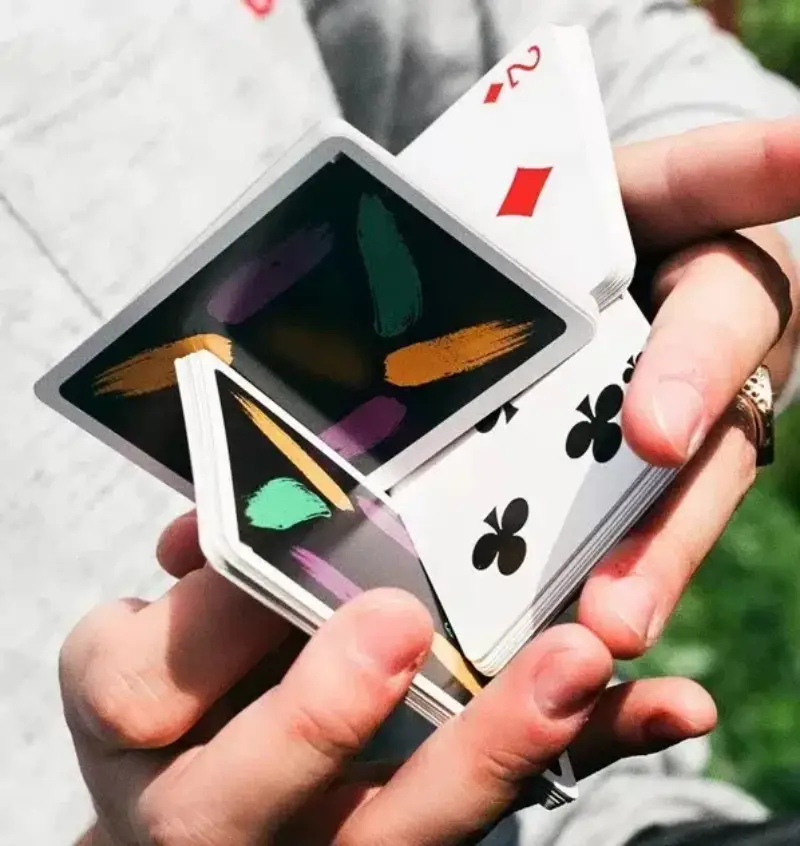
The playing card review master, whom we’ll call “The Card Whisperer,” explained that this isn’t something you can spot at a glance. No, it takes some serious card handling to uncover this quirk. And who better to test the limits of playing cards than those who regularly practice Cardistry and card tricks?
The Card Whisperer shared, “I always fiddle with a deck while binge-watching my favorite shows. It’s my way of really putting these cards to the test and giving them a fair review.”
Now, things got interesting. This red ink bleed issue wasn’t common in his career. He recalled, “I’ve only seen this issue once before in a deck using copper metallic ink from USPCC. It was a rare find!”
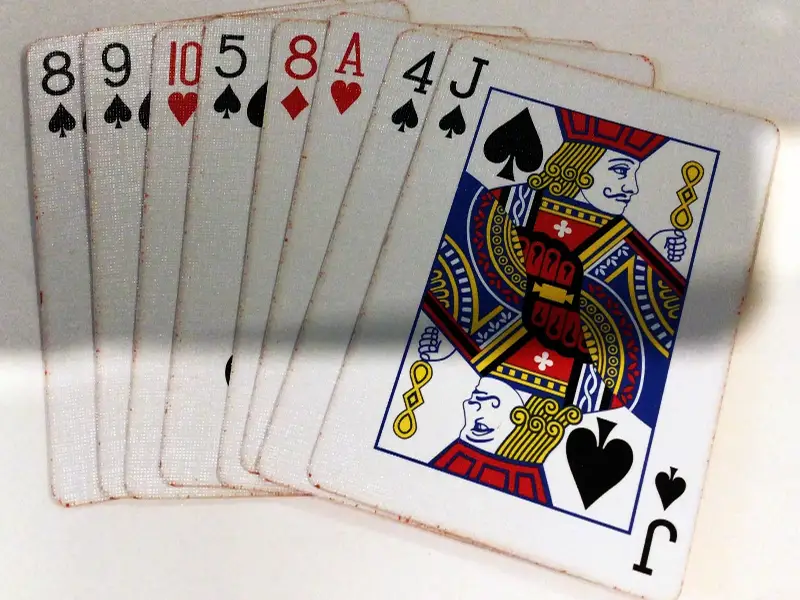
Understanding The Ink Bleed Phenomenon
The Hidden Problem: Design Defects
So, what’s the deal with this color bleed? The Card Whisperer had a theory: it might be a problem with borderless designs at card back (or face). You see, card backs with white borders typically don’t have this issue because the main friction during shuffling occurs at the edges. But for borderless cards, like this problematic deck, the design extends all the way to the edge. It’s like giving the ink free rein to wander!
This discovery is significant not only for playing card manufacturers like us, but also for card designers. Should there be a balance between aesthetics and practicality? While borderless designs are visually appealing and fashion, they might impact the longevity of the cards.
Here’s another interesting twist: dark designs are like that friend who can’t keep a secret—you’ll notice any bleeding immediately. On the other hand, light designs are more discreet about their issues. But don’t be fooled—just because you can’t see it doesn’t mean it’s not happening!
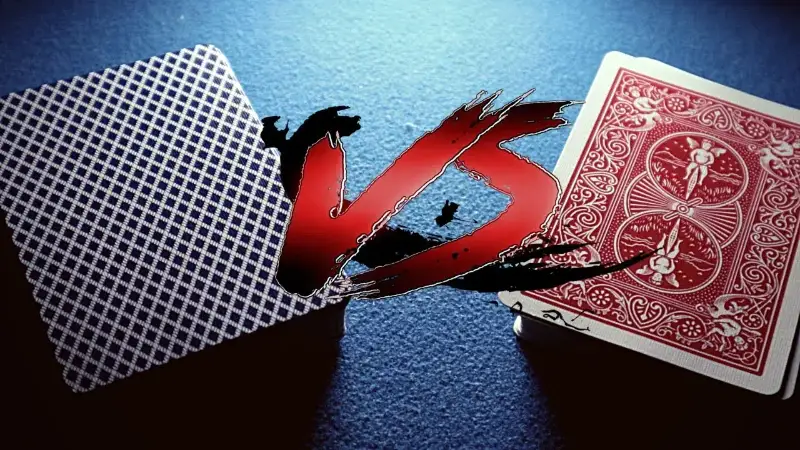
Laying the Groundwork: Ink and Paper
Aside from design issues, CPPS’s decade-long experience in card production allows us to infer a few contributing factors:
Firstly, let’s talk about the type of ink. UV ink is like the royal flush of card printing—tough, durable, and resistant to bleeding. This ink dries quickly through ultraviolet light curing, forming a solid film that boasts excellent abrasion and scratch resistance. As a result, UV ink is ideal for high-demand cardistry and magic cards, as it can withstand frequent use and friction without compromising clarity and vibrant colors.
However, if you opt for the more common water-based ink, while it’s eco-friendly and cost-effective, it can be somewhat unpredictable. Since water is its main component, water-based ink is susceptible to environmental humidity and temperature during the drying process.
If the humidity is too high, the ink may not dry completely, leading to smudging or bleeding. Additionally, water-based ink might fade over time due to paper wear, posing a challenge for cards that need to maintain a high-quality appearance over extended periods.
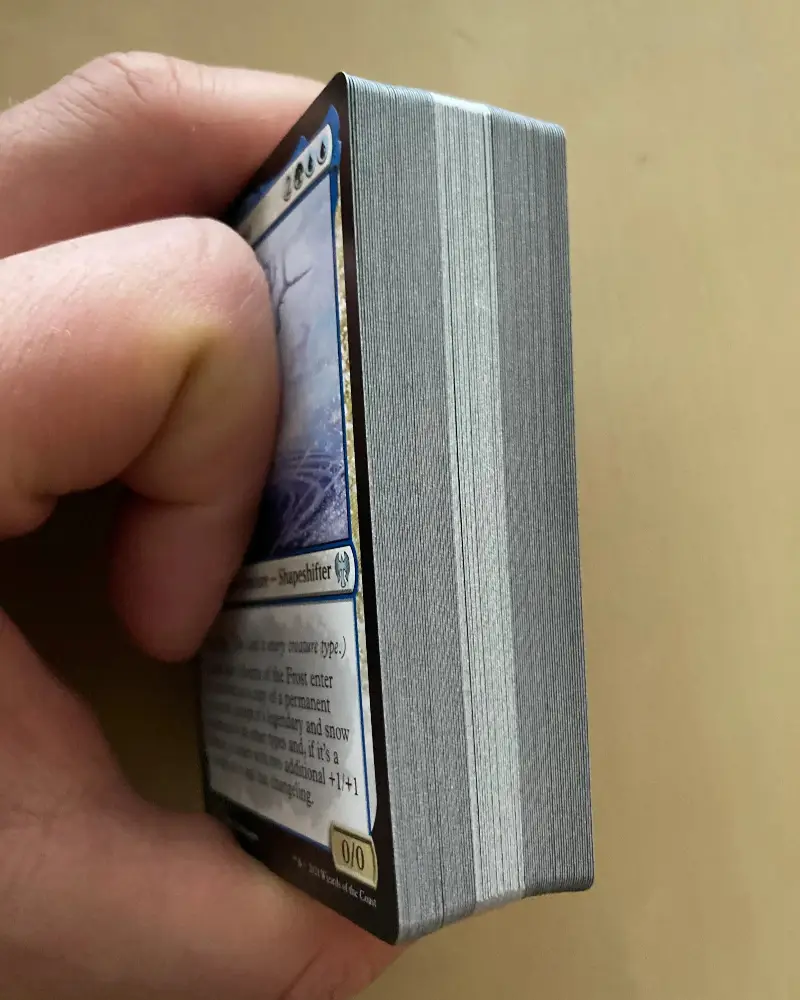
Next is the cardstock, which is like the host of a party—it can make or break the entire event. High-quality playing card paper, such as black core and blue core paper, can retain ink like a pro, while cheaper paper, such as white cardstock, may let the ink fade faster than your poker winnings. The main reason behind this lies in the density and absorbency of the paper.
Black core and blue core paper are typically made from multiple layers of pressed pulp, with an opaque black or blue material sandwiched in the middle. This structure not only increases the strength and durability of the paper, but also effectively prevents ink from bleeding and spreading. In contrast, white cardstock, due to its single-layer construction and lower density, is more absorbent, causing the ink to diffuse and blur, resulting in poor print quality.
To ensure the ink on your cards remains lasting and clear, opting for high-quality black core or blue core paper is a wise choice. These premium cardstocks not only offer better ink retention but also enhance the overall texture and feel, making your playing cards outstanding both visually and tactilely!
Other Factors May Influence Ink Bleed
Under normal circumstances, ink bleeding does not occur during the printing process. However, if the paper is not sufficiently dry, or if the operation area/machine itself is dirty, edge bleeding and other stains may appear.
When the paper’s humidity is too high, the ink tends to spread during printing, leading to edge bleeding. Especially in humid environments, the paper absorbs moisture from the air, affecting the printing outcome.
Therefore, maintaining the paper within an appropriate humidity range is crucial. Typically, the paper should be stored in a dry, well-ventilated environment before printing, and humidity levels should be monitored during the printing process.
The cleanliness of the operation area and printing equipment is equally important. If the printing equipment is not cleaned in a timely manner, residual ink and dust can contaminate newly printed paper, causing edge bleeding and other stains.
Additionally, the tidiness of the operation area can affect print quality. Keeping the printing equipment and operation area clean, and regularly maintaining and servicing the equipment, can effectively prevent such issues.
Luckily, these are very simple and entirely avoidable issues, as long as you work with a card manufacturer that uses professional printing equipment and techniques. Printers like CPPS, with advanced printing equipment and strict quality control processes, can effectively monitor the entire printing process and prevent issues such as edge ink bleeding.
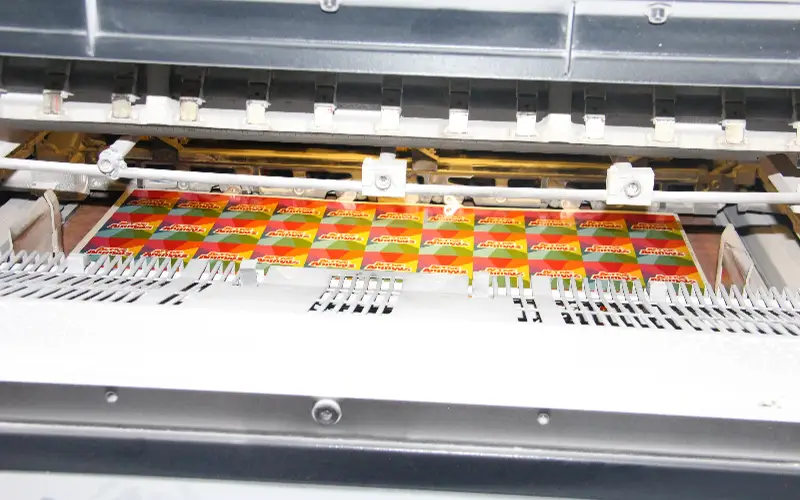
Let’s not forget about the usage and storage environment. Storing your cards in a sauna? Definitely not a good idea. High heat and humidity will turn your deck into a mess faster than you can say “full house.” Store your playing cards in a cool, dry place. It would be even better if there were dedicated poker cases or cabinets!
Want to test your own deck for this hidden ink issue?
The Card Whisperer suggests giving them a workout: “Shuffle for about an hour. Try some fast shuffles, some intricate Faro shuffles, really put them through their paces.” This extended testing not only helps evaluate the quality of the playing cards but also provides a great opportunity to improve personal card handling skills!
Conclusion About Ink Bleed
In summary, this conversation not only uncovered a specific technical issue but also showcased the playing card industry’s (be it manufacturers, designers, or consumers) relentless pursuit of quality. From printing processes to design choices, from usage environments to testing methods, every detail influences the final quality of playing cards.
As technology advances and player demands evolve, playing card manufacturers face new challenges and opportunities. This discussion about red ink bleed might just be the tip of the iceberg, heralding more in-depth research on playing card quality and durability.
For playing card enthusiasts and collectors, this is undoubtedly an exciting time. CPPS will continue collaborating with various experts to explore and develop more innovative solutions, as well as new methods to enhance durability while maintaining aesthetic appeal. After all, a high-quality deck of playing cards is not only a piece of art but also a bridge that connects people, carrying countless joys and memories.
Keep shuffling, folks, and may your ink stay put and your edges stay clean!


