
Custom Cardstock & Material
Choose the custom card stock and materials that are best for you by understanding terms like weight, core, and texture.
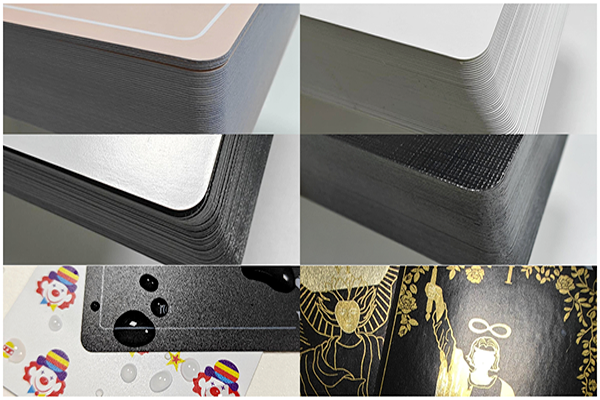
Once you have decided on the type, size & shape, and quantity of your cards, you need to choose the cardstock and material that you want to print your cards on. However, there are a few things you need to know about cardstock before choosing one.
Cardstock is a thicker, heavier, and more durable type of paper compared to regular printing or writing paper. It usually has a smooth surface, but it can also come in textured, metallic, or glossy finishes. Cardstock is sturdier and heavier than regular paper but thinner and more flexible than paperboard.
When talking about card stock, you have to mention FSC (The Forest Stewardship Council). It is an important initiative in response to reducing carbon emissions and vigorously developing a sustainable green low-carbon economy, representing that the wood materials used are all sourced from sustainably certified forests.
An increasing number of countries, such as the European Union, the United States, Australia, Japan, and South Korea, require this certification for the import and export of wood products.
As a responsible manufacturing company, all of CPPS’s paper suppliers have obtained FSC forest certification, ensuring that the wood used in all aspects from raw material procurement, storage, production to sales comes from well-managed, sustainably developed forests.
There are many types of cardstock and material that you can choose from CPPS, depending on the quality and feel of your cards. There are some of the most common cardstock and material options and their features as follows.
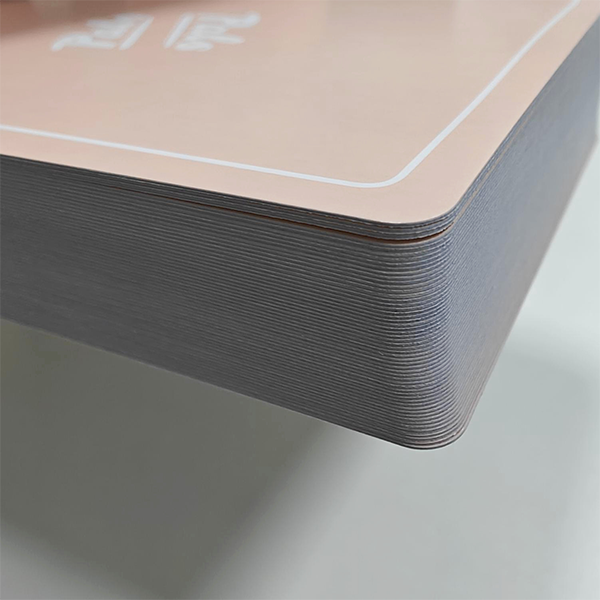
Blue Core
Blue core paper stands out as the go-to option for cardstock in the promotional market. Typically chosen for projects with lower budgets or lower production volumes, such as game design, advertising promotions, wedding giveaways, and similar endeavors.
Smooth Black Core
The smooth black core serves to elevate the opacity of the card while preserving its exceptional smoothness. It is well-suited for situations where extensive handling is expected or where the prevention of cheating is paramount, like casinos, magic shows, high-end gifts, among others.
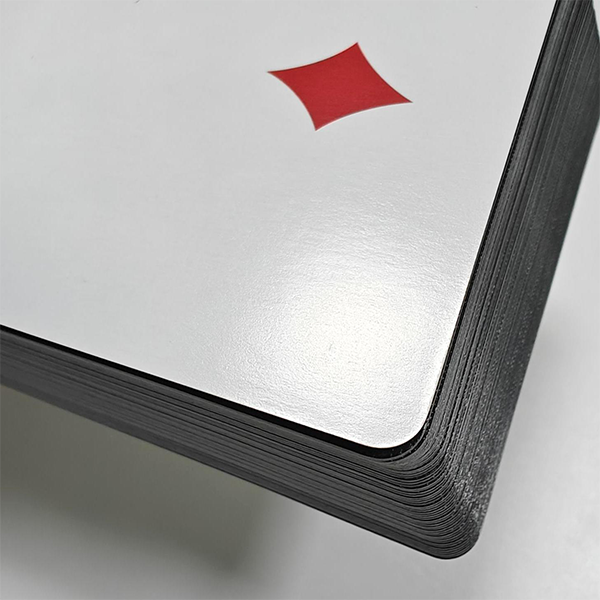
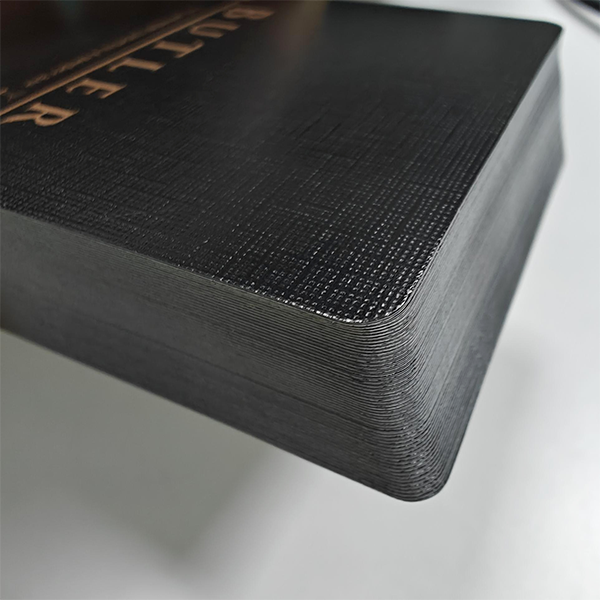
Air Linen Black Core
Air linen black core is the ideal choice for premium products, and upholds a remarkable level of confidentiality and durability. It is widely favored for the production of high-end gift playing cards, casino playing cards, Cardistry, as well as for premium tarot cards and oracle cards.
Art Paper
Art paper is crafted from regular white cardstock coated with two layers of white chemical material. Ideal for applications where a steady hand is emphasized, such as game cards, tarot cards, oracle cards, and study cards, art paper may not be the most suitable choice for playing cards.
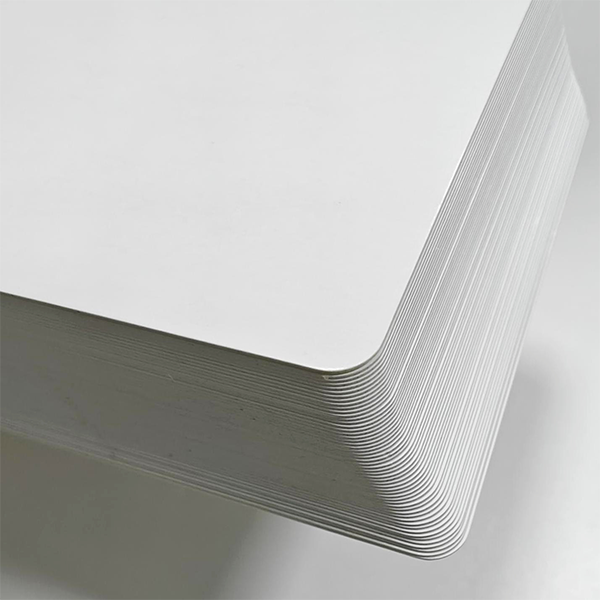
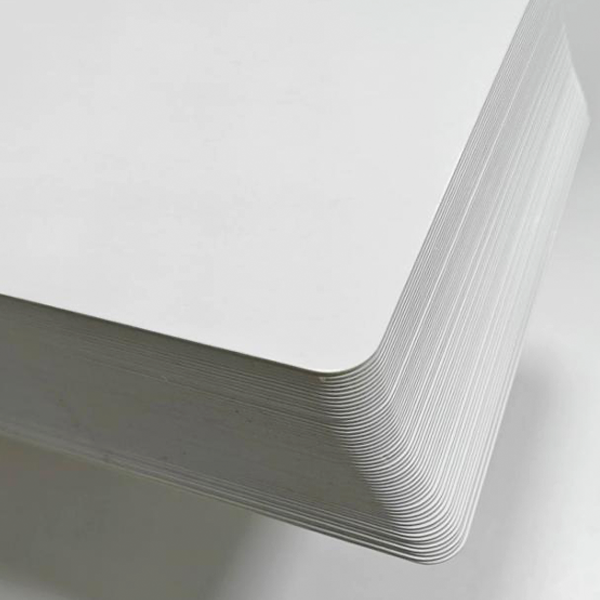
White Paper
White card paper is renowned for its high whiteness, smooth surface, and eco-friendly recyclability, allowing it to exhibit excellent ink performance and glossiness at a great value during printing. This makes white card paper commonly used in packaging boxes, game cards, and flash cards.
P.S. The actual edges of the finished product may not necessarily match the color of the card core, as illustrated above. If your card background is predominantly dark, this color is likely to bleed into the edges, revealing the background color.
Plastic Cardstock
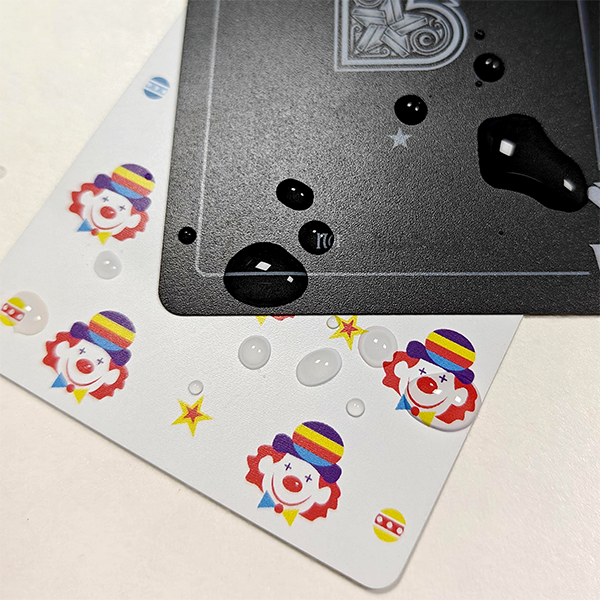
Plastic card stock varying in thicknesses with different surface finishes and color options can be offered, including smooth, fine sand, coarse sand, as well as white and black. Manufactured from 100% high-quality PVC (polyvinyl chloride), it is odor-free and pose no harm to the human body.
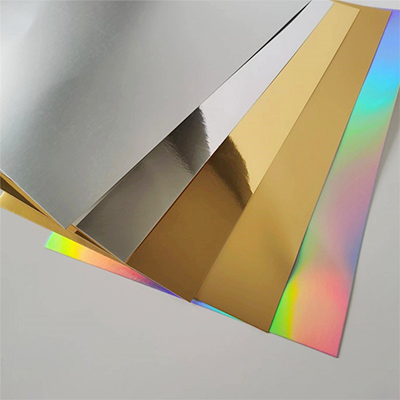
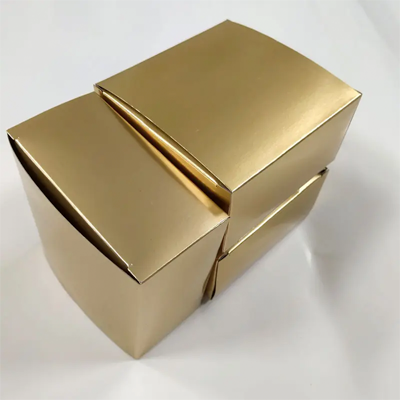
Aluminum/film composite paper is formed by laminating PET film or aluminum foil, and required base paper with adhesive. It comes in various colors such as gold, silver, holographic, etc.
Due to its composite nature, its basis weight generally increases by 20-25gsm compared to the base paper. For example, if 250gsm double copper paper is used to make composite paper, the basis weight would be around 275±15gsm, and the thickness would be around 255±10um.
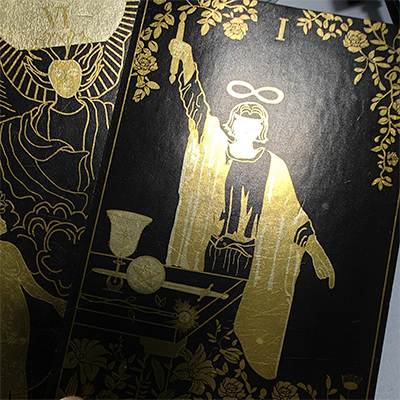
This type of paper has a bright luster, strong metallic feel, and can be customized with various colors and patterns, making it ideal for standard game cards and trading cards. It is relatively inexpensive, with simpler printing processes, and can replace expensive foil stamping for large areas, adding decorative elements to cards or packaging.
For instance, many standard holographic cardstock on the market use PET holographic film composite paper. They utilize holographic film as the base and then undergo CMYK printing on top. The advantage of this approach is the ability to control where the holographic effect appears.
However, although the paper is sturdy and vibrant, its printing ink penetration and absorption capabilities are limited, necessitating the use of UV printing. Compared to foil stamping, the visible tactile sensation and glossiness of the paper may be slightly inferior, and it is more prone to scratching.
Consider the following factors when selecting cardstock and materials for:
Durability
Opt for thicker and high-quality materials, such as 350gsm art paper or 0.32mm plastic cardstock, to ensure your cards can withstand heavy use.
Feel
The tactile experience of the cards impacts the overall gaming experience. For a smooth feel, choose plastic or air linen black core. If a more traditional feel is desired, opt for art paper or blue core.
Cost
The cost of cardstock and materials varies based on the type selected. Generally, thicker cardboard incurs higher costs, and blue core < art paper < plastic cardboard < black core. Factor this into your decision-making process.